How to Freeze Cooked Rice and Reheat It Safely
Freeze leftover rice in convenient portions without compromising safety or texture. Learn how quickly to cool it, how to package it, and how to reheat it thoroughly from frozen.
Key takeaways
- Cool rice promptly in shallow portions, aiming to refrigerate or freeze it within one hour of cooking.
- Freezing and reheating cannot reliably make rice safe if it was left at room temperature too long.
- Use airtight, meal-sized packages and aim to eat frozen rice within one to two months for better quality.
- Reheat rice to 165°F/74°C throughout, stirring to eliminate cold spots.
- Reheat only the portion you need and follow the cautious rule of reheating rice only once.
You can freeze cooked rice and reheat it safely, provided you cool it promptly, freeze it in small portions, and heat it thoroughly before eating. The most important step happens before the rice reaches the freezer: do not leave it sitting in the saucepan or rice cooker for hours.
This guide uses a cautious home-kitchen routine: aim to cool and store rice within one hour, freeze it in meal-sized portions, and reheat only what you will eat.
Why Cooked Rice Needs Careful Handling
Uncooked rice can contain spores of Bacillus cereus, a bacterium associated with food poisoning. These spores can survive cooking. If cooked rice stays warm or at room temperature for too long, bacteria can multiply and may produce toxins.
Freezing stops bacterial growth, but it does not reliably destroy spores or remove toxins already present. Reheating is not a rescue method for rice that has been stored incorrectly; some toxins can withstand heat.
That means cooked rice safety depends on time and temperature, not whether the rice smells normal. Unsafe rice may look, smell, and taste unchanged.
Use these practical boundaries:
- Start cooling leftover rice immediately after serving.
- Aim to cool and refrigerate or freeze it within one hour.
- Discard rice left at room temperature for more than two hours, or more than one hour when the surrounding temperature exceeds 90°F/32°C.
- Treat those discard limits as maximum boundaries, not cooling targets.
- Only keep rice warm in equipment that reliably maintains a safe hot-holding temperature; an unplugged rice cooker does not count.
How to Freeze Cooked Rice Step by Step
Most everyday varieties freeze well, including white, brown, jasmine, and basmati rice. Texture may change slightly, but prompt cooling and airtight packaging make a noticeable difference.
1. Separate The Rice Into Small Portions
Use clean utensils to divide the leftovers into portions you would normally eat at one meal. A large, tightly packed pot cools slowly, especially in the center.
For effective rice meal prep, set aside the portions you intend to freeze as soon as cooking finishes, rather than leaving the whole batch on the table during dinner.
2. Cool It Quickly
Spread rice in a thin layer on a clean, shallow tray, or divide it among shallow containers. If necessary, place the containers in an ice-water bath, keeping water out of the rice.
Do not wait for a large batch to reach room temperature on the counter. Small, shallow portions can go into the refrigerator while still warm. Leave space around them for cold air to circulate, and avoid stacking warm containers tightly together.
The goal is rapid cooling, not prolonged airing. Aim to get rice cooled and into cold storage within one hour of cooking.
3. Package for The Freezer
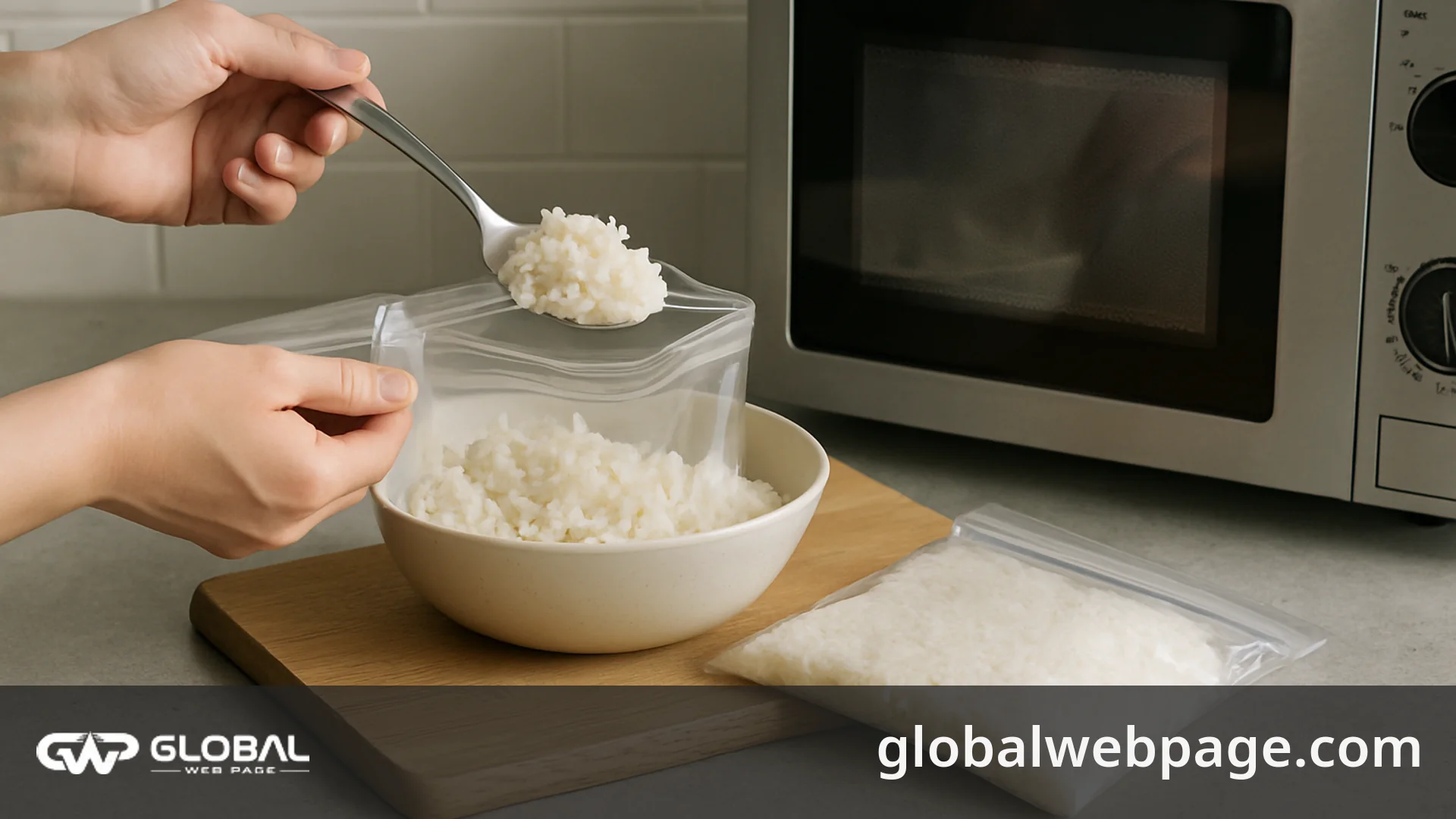
Transfer cooled rice to freezer-safe bags or airtight containers. Flatten bags into thin layers and press out excess air before sealing. This helps the rice freeze quickly and makes portions easier to stack.
For containers, leave a little room rather than packing rice tightly against the lid. Label each package with its contents and freezing date.
4. Freeze Promptly
Place packages in a freezer maintained at 0°F/-18°C or colder. Spread newly added portions out initially rather than piling them into a thick stack.
If you refrigerate the rice before deciding to freeze it, use a cautious approach: freeze it within 24 hours of cooking, provided it was cooled promptly and kept properly chilled. Freezing does not reset a questionable storage history.
How Long Can You Keep Rice in The Freezer?
For good texture and flavor, aim to use frozen cooked rice within one to two months. Longer storage can leave it dry or cause freezer burn, especially if the packaging allows air inside.
This is a quality recommendation, not a point at which correctly handled rice suddenly becomes unsafe. Food kept continuously frozen at 0°F/-18°C remains safe much longer, although its eating quality can decline.
Rice dishes containing chicken, seafood, vegetables, or sauces need equally careful handling. Follow the most cautious storage advice for any ingredient in the dish, and never freeze a mixed dish to salvage ingredients that have already been left out too long.
How to Reheat Frozen Rice Safely
You can reheat frozen rice directly from the freezer. There is usually no need to thaw it first, which makes single-serving portions particularly useful.
Whichever method you choose, heat the rice to 165°F/74°C throughout, checking several places with a clean food thermometer. Steaming edges do not guarantee that the center is hot.
Microwave Method
- Place one frozen portion in a microwave-safe bowl. Remove freezer packaging unless it is specifically suitable for microwave heating.
- Add approximately one tablespoon of water per cup of cooked rice, adjusting slightly for dryness.
- Cover with a vented microwave-safe lid to retain steam.
- Heat for an initial one to two minutes, then carefully stir and break apart any clumps.
- Continue in 30- to 60-second bursts, stirring between bursts, until the rice reaches 165°F/74°C throughout.
- Follow any appliance standing-time guidance and check the temperature again before eating.
These times are starting points, not safety guarantees. Portion size, microwave power, and the thickness of the frozen rice all affect heating time. Open covers carefully to avoid steam burns.
Stovetop Method
Put the rice in a saucepan with a small splash of water. Cover and heat over medium-low heat, stirring frequently and breaking up frozen pieces as they soften.
Add a little more water if the pan becomes dry before the rice is heated through. Check the center of any remaining clumps with a thermometer. Avoid simply warming the outside while leaving cold pockets inside.
If you prefer to thaw rice first, thaw it in the refrigerator rather than on the counter, then reheat and eat it within 24 hours.
Common Mistakes to Avoid
Good leftover rice storage is mostly about avoiding a few predictable shortcuts:
- Freezing rice that sat out overnight: discard it instead.
- Cooling rice in a deep pot: divide it into shallow portions first.
- Relying on smell: harmful contamination may have no obvious warning signs.
- Using a slow cooker to reheat cold rice: it can warm too slowly. Use a microwave or stovetop instead.
- Repeatedly reheating the same batch: follow the cautious rule of reheating rice only once.
- Saving part of a reheated portion for another day: heat smaller portions and discard what remains after the meal.
For fried rice, refrigerator-thawed or frozen rice can work well, but being cold does not make poorly handled rice safe. The original cooling and storage steps still matter.
A Simple Routine for Better Leftovers
Portion rice promptly, cool it quickly, seal and date it, and freeze it in thin packages. When you need it, add a little water and reheat thoroughly, checking the center rather than judging by surface steam alone.
For food businesses and recipe publishers, practical guidance like this also depends on clear presentation. Global Web Page helps turn useful expertise into accessible websites and search-friendly content. To discuss your food website or content project, contact Global Web Page.